Plant Location
For Immediate Release
Alyeschem announces site agreement on Alaska’s North Slope
Alyeschem is pleased to announce the conclusion of a purchase and sale agreement wherein Alyeschem will transfer ownership of approximately 10 acres of its gravel pad in central Prudhoe Bay to Harvest Alaska LNG.
Alyeschem is an Alaska-based company developing a small chemical plant that will use stranded North Slope Natural gas to manufacture methanol and ultra-low sulfur diesel on the North Slope. The parties have also concluded agreements allowing for construction of a common gas supply pipeline and other measures to cooperatively develop the site.
“We are very happy to be in a position to help support the plan to bring North Slope gas to heat Fairbanks homes,” said Alyeschem’s CEO JR Wilcox, who was born in Fairbanks. “The synergies of our operations made sense and thanks to the Governor’s emphasis on attracting investment and our energy security, we see great opportunities ahead adding value to Alaska’s natural resources for in-state use.
The first petrochemical facility in the US Arctic.
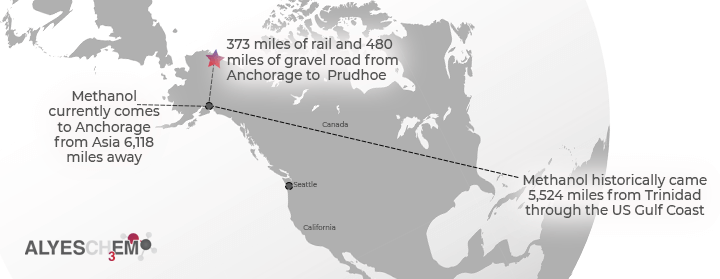
Huge resources and extreme logistics chains have created a fantastic opportunity. Dynamic energy markets and evolving regulatory regimes will prioritize existing sources of supply and continued operations for years to come.
THE NORTH SLOPE
The Prudhoe Bay Area
The North Slope is a flat, treeless wetland, which covers 88,000 square miles, from the foothills of the Brooks Mountain Range to the Arctic Ocean and west from the Canadian border to the Chukchi Sea.
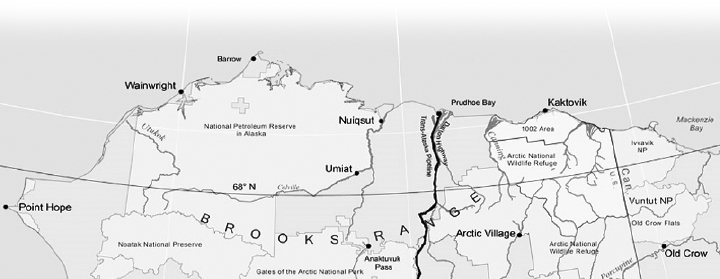
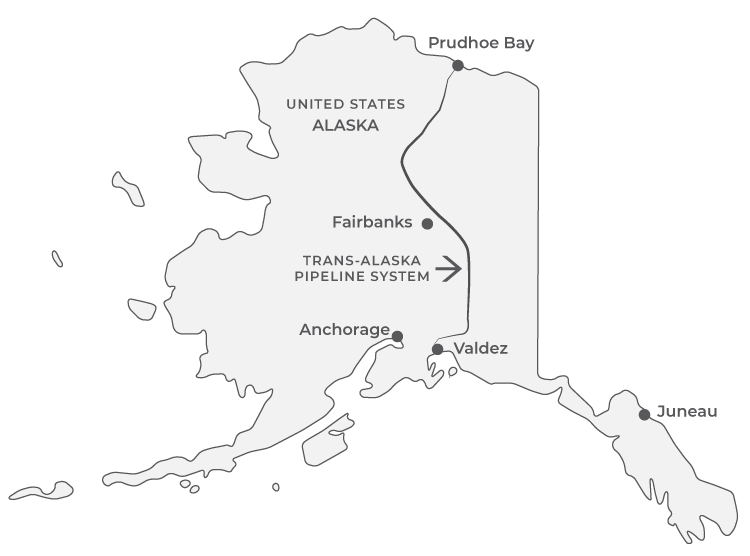
At the heart of Alaska’s oil patch is Prudhoe Bay. The Prudhoe Bay Unit (PBU) contains the Prudhoe Bay Field, the Prudhoe Bay satellite fields and the Greater Point McIntyre Area fields. After more than 44 years of production and approximately 18 billion barrels of oil produced, Prudhoe Bay remains the largest conventional oil field in the United States and is the 10th largest natural gas field in the United States.
Development of the field began in 1969 and the first barrel of crude oil made its way down the 800-mile Trans Alaska Pipeline System (TAPS) on June 20th, 1977.
The Prudhoe Bay Field has more than 1,300 active oil-producing wells and gas reserves of approximately 25 trillion cubic feet of natural gas. Drilling is expected to continue for at least another 50 years inside of Prudhoe as well as in the new fields which continue to be found around it.
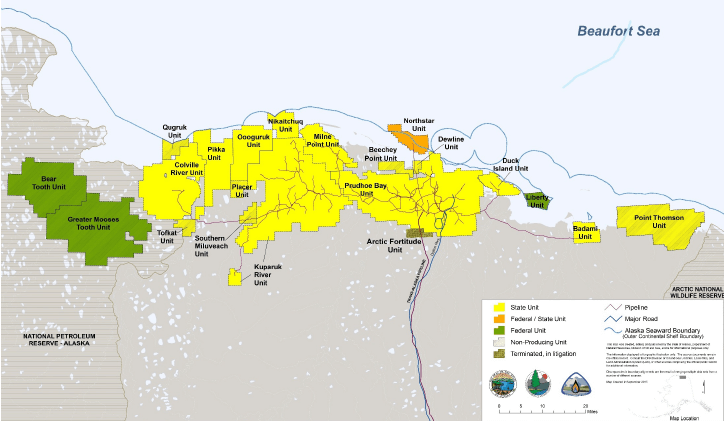
The Prudhoe Bay Unit is the largest, but certainly not the only unit on Alaska’s North Slope. In December 2020 there were a total of thirteen fields producing from 50 reservoir pools through 2,403 operating wells run by seven different operating companies. The North Slope contains six of the US’s top 100 oil fields. According to the US Energy Information Administration Alaska added 254 million barrels of proven reserves in 2019; more than any other state. All of the fields require methanol and ULSD in their operations; as does Alyeska, the operator of the Trans-Alaska Pipeline. Methanol has been in continuous use in Alaska oilfields for more than 40 years.
MAP COURTESY OF DNR
APPROXIMATELY 5 ACRES LOCATED ON AN EXISTING 14-ACRE PAD IN THE CENTRAL PRUDHOE BAY UNIT
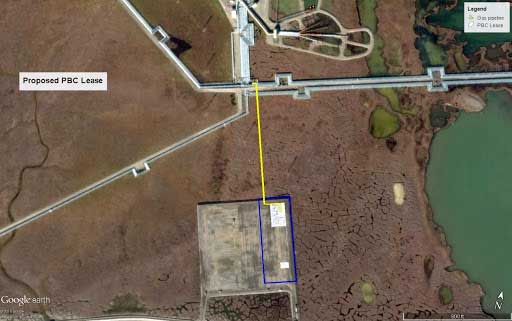
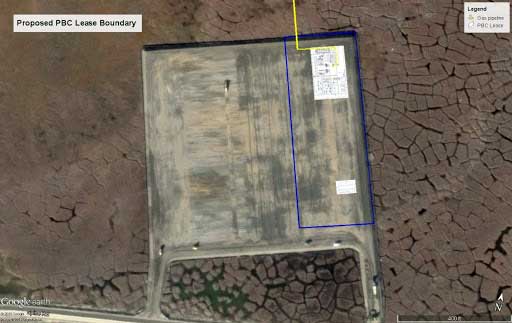
An abandoned project to provide LNG to Fairbanks has provided a golden opportunity for Alyeschem to save years of permitting and development work. The project left a vacant 14-acre pad and a permitted pipeline right-of-way to intertie with the Prudhoe Bay Unit’s field fuel gas system.
The Prudhoe Bay Unit is the largest, but certainly not the only unit on Alaska’s North Slope. In December 2020 there were a total of thirteen fields producing from 50 reservoir pools through 2,403 operating wells run by seven different operating companies. The North Slope contains six of the US’s top 100 oil fields. According to the US Energy Information Administration Alaska added 254 million barrels of proven reserves in 2019; more than any other state. All of the fields require methanol and ULSD in their operations; as does Alyeska, the operator of the Trans-Alaska Pipeline. Methanol has been in continuous use in Alaska oilfields for more than 40 years.